Toxic Alcohol Poisoning & the Anion Gap
Methanol and ethylene glycol are the classic toxins that raise the anion gap. Their signature is a simultaneously elevated anion gap and elevated osmolar gap — a time-critical clue that should trigger fomepizole and hemodialysis before confirmatory levels return.
The high-AG + high-osmolar-gap pair
Toxic alcohol poisoning — most often methanol (windshield washer fluid, illicit spirits, solvents) and ethylene glycol (antifreeze, brake fluid) — is a leading cause of severe, unexplained high anion gap metabolic acidosis. Both are small, uncharged molecules that raise serum osmolality before they are metabolized, then their organic-acid metabolites widen the gap. The simultaneous finding of an elevated gap and a high osmolar gap is the bedside signature of recent toxic alcohol ingestion — confirm with the osmolar gap calculator and treat empirically.
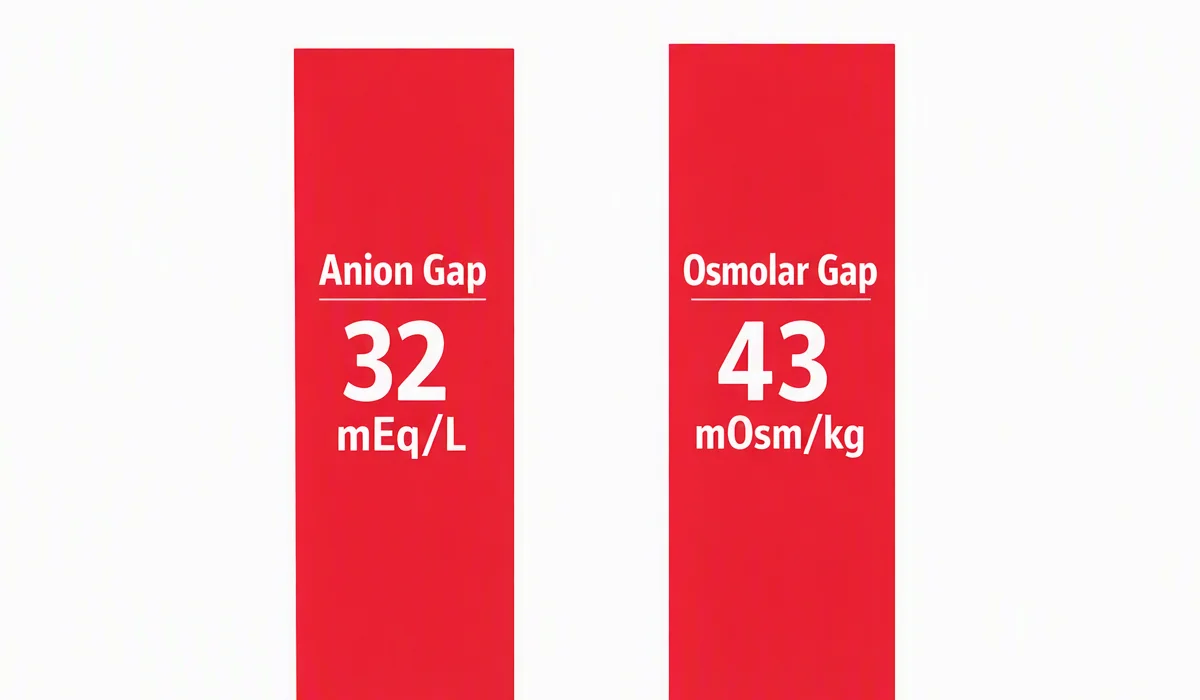
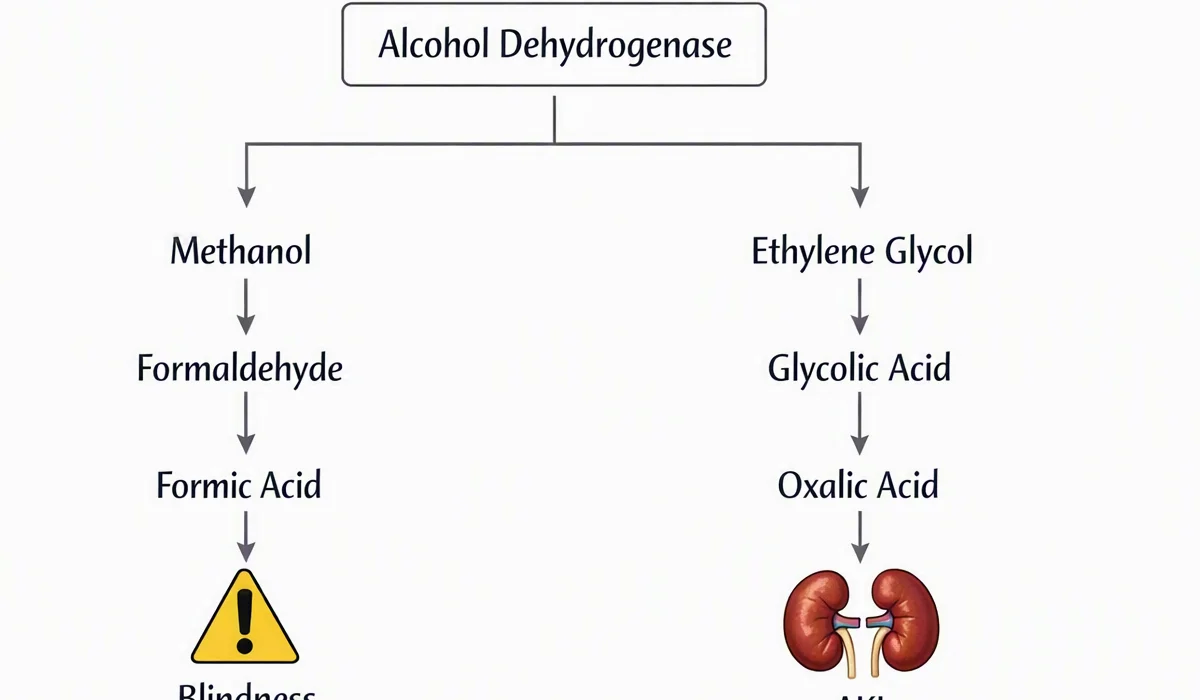
Toxic alcohol poisoning causes a simultaneously high anion gap and high osmolar gap. Methanol is metabolized to formic acid (causing basal ganglia injury and blindness); ethylene glycol is metabolized to glycolic and oxalic acid (causing acute kidney injury and calcium oxalate crystals)12. Treatment is fomepizole or ethanol to block alcohol dehydrogenase, plus hemodialysis for severe acidosis, organ injury, or high levels34.
Comparison of the three toxic alcohols
| Alcohol | Toxic metabolite | Anion gap | Osmolar gap | Signature injury |
|---|---|---|---|---|
| Methanol | Formic acid (via formaldehyde) | High (severe HAGMA) | High (early) | Optic neuropathy ("snowstorm" vision, blindness); putaminal and basal ganglia necrosis on MRI |
| Ethylene glycol | Glycolic acid + oxalic acid | High (severe HAGMA) | High (early) | Acute kidney injury from calcium oxalate crystallization; envelope/needle crystals in urine; hypocalcemia |
| Isopropanol (rubbing alcohol) | Acetone (no organic acid) | Normal — no acidosis | Highest of the three | Ketosis without acidosis; hemorrhagic gastritis; CNS depression; large ketonuria with normal pH |
Methanol — formic acid, basal ganglia, blindness
Methanol is metabolized by alcohol dehydrogenase to formaldehyde and then to formic acid, which is the proximate toxin15. Formate inhibits mitochondrial cytochrome c oxidase, producing lactic acidosis on top of the formate-driven HAGMA, and is preferentially toxic to the optic nerve and putamen. Patients classically describe "snowstorm" or blurred vision, photophobia, and headache, and MRI may show bilateral basal ganglia and putaminal necrosis. The gap and osmolar gap are both elevated in the early window; as methanol is fully metabolized, the osmolar gap falls while the anion gap peaks.
Ethylene glycol — oxalic acid, renal failure, crystals
Ethylene glycol is metabolized sequentially to glycoaldehyde, glycolic acid, glyoxylic acid, and finally oxalic acid15. Glycolic acid drives most of the metabolic acidosis, while oxalic acid chelates calcium and precipitates as calcium oxalate crystals in renal tubules, causing acute kidney injury. Urine microscopy may show envelope-shaped (dihydrate) or needle-shaped (monohydrate) crystals, and the serum calcium is often low. As with methanol, the osmolar gap is highest early and the widened gap rises as metabolism proceeds.
Isopropanol — ketosis without acidosis
Isopropanol is metabolized to acetone, not an organic acid, so it produces no anion gap metabolic acidosis — distinguishing it sharply from methanol and ethylene glycol. It does produce the highest osmolar gap of the three and large amounts of serum and urine ketones (acetone) with a normal pH and bicarbonate, plus hemorrhagic gastritis and profound CNS depression. The clinical picture is "ketosis without acidosis." Fomepizole is not indicated because acetone is not a toxic organic acid.
When the gap and osmolar gap are both elevated and another cause (DKA, lactic acidosis) is not clearly responsible, start fomepizole immediately and consult nephrology for hemodialysis. Confirmatory serum methanol and ethylene glycol levels take hours, and the metabolites cause irreversible organ injury during that window.
Workup and treatment
The diagnostic and therapeutic sequence is run in parallel. Measure the gap, osmolar gap, lactate, ketones, renal function, and a venous blood gas, then send serum methanol and ethylene glycol levels (results take hours). Empiric treatment should not be delayed.
- Block alcohol dehydrogenase with fomepizole (loading dose 15 mg/kg IV, then 10 mg/kg q12h; increase dosing frequency after 48 h due to autoinduction). If fomepizole is unavailable, an ethanol infusion (target blood ethanol 100–150 mg/dL) is a tested alternative36.
- Give cofactors. Thiamine (100 mg IV) and pyridoxine (50 mg IV) divert glyoxylic acid away from oxalate production in ethylene glycol poisoning. Folate (1 mg/kg IV q4–6h) accelerates formate metabolism in methanol poisoning15.
- Hemodialysis to remove the parent alcohol and its metabolites. Indications include a markedly elevated anion gap with metabolic acidosis (pH < 7.30), renal failure, visual symptoms (methanol), or serum methanol/ethylene glycol levels > 50 mg/dL. Continue fomepizole during and after dialysis (it is dialyzable)46.
- Supportive care — airway, fluid resuscitation, correction of hypoglycemia and acidosis with isotonic fluids and (in severe acidemia) sodium bicarbonate. Avoid alcohol-containing medications.
Read more in our broader toxin-induced HAGMA guide, and compare with salicylate toxicity — the other classic toxin cause of high-AG metabolic acidosis.
Key takeaways
- Methanol and ethylene glycol produce a simultaneously high anion gap and high osmolar gap — the bedside signature of toxic alcohol ingestion.
- Methanol → formic acid (blindness, basal ganglia injury); ethylene glycol → oxalic acid (renal failure, calcium oxalate crystals).
- Isopropanol is the exception: ketosis without acidosis and a normal anion gap.
- Start fomepizole and consult nephrology for hemodialysis as soon as the diagnosis is suspected — do not wait for serum levels.
References
- Kruse JA. "Methanol and ethylene glycol intoxication." Critical Care Clinics. 2012; 28(4):661–711. Link ↗
- Kraut JA, Kurtz I. "Toxic alcohol ingestions: clinical features, diagnosis, and management." Clinical Journal of the American Society of Nephrology (CJASN). 2008. Link ↗
- LITFL. "Fomepizole — Toxicology Library Antidotes." Life in the Fast Lane. Link ↗
- Roberts DM, et al. "EXTRIP Workgroup recommendations for dialysis-treated ethylene glycol poisoning." American Journal of Kidney Diseases. 2015. Link ↗
- LITFL. "Toxic Alcohols." Life in the Fast Lane Toxicology Library. Link ↗
- Brent J, et al. "Fomepizole for the treatment of ethylene glycol poisoning." New England Journal of Medicine. 1999. Link ↗
Detect the toxin. Start fomepizole.
Calculate the anion gap and osmolar gap side by side — the time-critical pair for toxic alcohol ingestion.
Open the osmolar gap calculator