Ethylene Glycol Poisoning — The Double Gap
A found-down patient with an unidentified ingestion. A markedly elevated anion gap paired with a high osmolar gap is the classic fingerprint of a toxic alcohol — this case walks through the diagnosis of ethylene glycol poisoning and the fomepizole-plus-hemodialysis pathway.
Presentation
A 47-year-old man is brought to the emergency department unconscious, found down in a garage next to an open container of automotive antifreeze. Bystanders report he was binge-drinking ethanol earlier. On arrival he is obtunded (GCS 9), tachypneic (RR 30) with deep respirations, and hypotensive (BP 96/58). There is no head trauma. A venous blood gas, metabolic panel, serum osmolarity, and ethanol level are sent immediately. The clinical question is urgent: is this a toxic-alcohol ingestion, and if so, which one?
Initial laboratory values
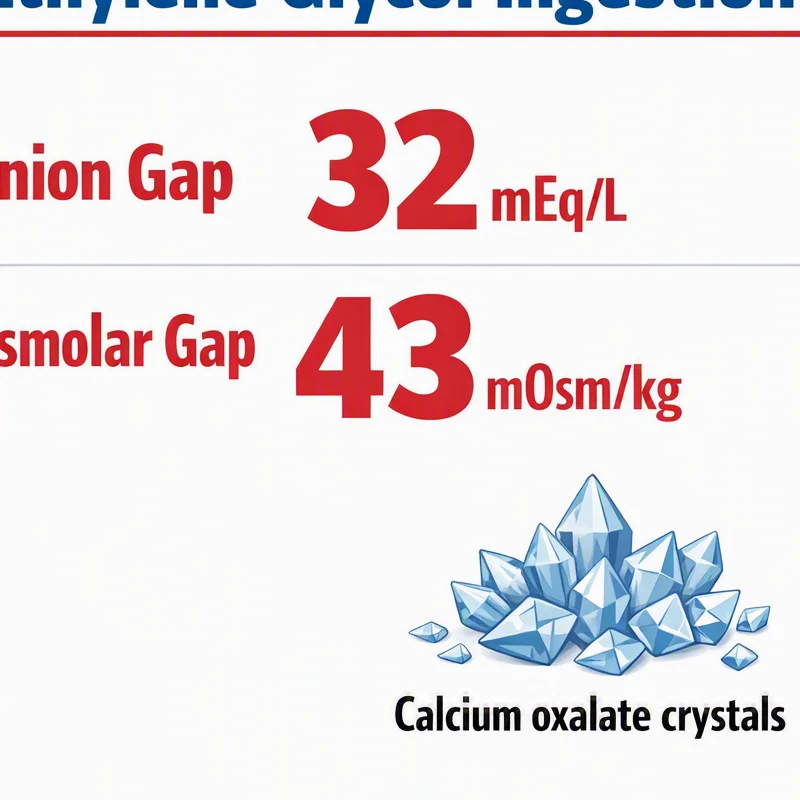
Two numbers jump off the panel. The anion gap is 32 mEq/L — markedly elevated, signaling a severe HAGMA. The osmolar gap is 43 mOsm/kg — far above the normal < 101, indicating a large load of unmeasured osmoles in the serum. The pairing of a high anion gap with a high osmolar gap is called the double gap, and it is the signature of toxic-alcohol poisoning2.
Anion gap and osmolar gap — the calculations
Anion gap: AG = Na⁺ − (Cl⁻ + HCO₃⁻) = 140 − (100 + 8) = 140 − 108 = 32 mEq/L3. Against a normal of 8–12, this is a 20-point elevation — a profound HAGMA. Confirm the arithmetic in the anion gap calculator.
Osmolar gap: first calculate the expected serum osmolarity: 2 × Na⁺ + glucose/18 + BUN/2.8 = 2(140) + 130/18 + 28/2.8 = 280 + 7.2 + 10 = 297 mOsm/kg. Then subtract from the measured value: 340 − 297 = 43 mOsm/kg. A gap above 10 mOsm/kg is abnormal; 43 is markedly elevated1. Run the same figures through the osmolar gap calculator to reproduce the result.
A high anion gap plus a high osmolar gap in the right clinical context (found down, suspected ingestion, inebriated appearance) is presumptive toxic-alcohol poisoning. Do not wait for a confirmatory serum ethylene-glycol or methanol level — those assays take hours and the window to prevent end-organ damage is measured in minutes. Start fomepizole (or an ethanol infusion if fomepizole is unavailable) immediately.
Differential — why ethylene glycol and not methanol or DKA?
The double gap narrows the field to the toxic alcohols (ethylene glycol, methanol, propylene glycol, diethylene glycol) and rules out most other HAGMA causes. Lactic acidosis, uremia, and ketoacidosis do not produce a significant osmolar gap. The clinical history (antifreeze container), the renal injury (creatinine 2.1, pointing to ethylene glycol's nephrotoxic metabolite oxalate rather than methanol's retinal toxicity), and the urine microscopy together pin down the agent. The full toxic-alcohol differential and the role of each unmeasured osmole are reviewed on the toxic alcohols page and the broader toxin-induced HAGMA guide.
Calcium oxalate crystals — the tissue fingerprint
Ethylene glycol is metabolized by alcohol dehydrogenase to glycoaldehyde, then to glycolic acid (the principal acid responsible for the anion gap), glyoxylic acid, and finally oxalic acid24. Oxalate precipitates with calcium in the renal tubules as calcium oxalate crystals, visible on urine microscopy as envelope-shaped (calcium oxalate monohydrate) or needle-shaped (dihydrate) crystals. Their presence, with the double gap and acute kidney injury, is essentially pathognomonic. The concurrent hypocalcemia (from calcium precipitation) is another supportive clue.
Treatment — fomepizole and hemodialysis
The two therapeutic pillars are blocking alcohol dehydrogenase and removing the parent alcohol and its acids. Fomepizole (4-methylpyrazole) competitively inhibits alcohol dehydrogenase, halting the production of toxic metabolites and allowing the unchanged parent alcohol to be cleared renally4. If fomepizole is unavailable, an intravenous ethanol infusion achieves the same inhibition (ethanol is the preferred substrate for alcohol dehydrogenase). Hemodialysis is indicated for severe acidosis (pH < 7.30), renal failure, markedly elevated ethylene glycol level, or visual symptoms (the latter pointing to methanol rather than ethylene glycol)4. Dialysis removes both ethylene glycol and its acids and rapidly corrects the acidosis and the osmolar gap.
Over the course of treatment, both the anion gap and the osmolar gap are tracked serially. As fomepizole blocks new metabolite formation and dialysis clears the existing load, the anion gap falls first (glycolic acid is dialyzable), followed by the osmolar gap (the parent alcohol clears more slowly). The distinction between anion gap and osmolar gap dynamics is explored on the anion gap vs osmolar gap FAQ page. Cofactor therapy with thiamine and pyridoxine is added to divert glyoxylate metabolism away from oxalate toward non-toxic end-products, limiting renal injury.
Key lessons from this case
- The double gap (high AG + high osmolar gap) is a toxic-alcohol toxidrome — start fomepizole before the confirmatory level returns.
- Ethylene glycol targets the kidney via calcium oxalate crystals; methanol targets the retina. The end-organ pattern helps distinguish them while levels are pending.
- Calculate both gaps on every suspected ingestion — the anion gap alone misses early presentations (before significant metabolism) and the osmolar gap alone misses late presentations (after the parent alcohol has been metabolized to acids).
- Hemodialysis is definitive for severe cases; track both the anion gap and osmolar gap to gauge clearance and guide when to stop dialysis.
References
- Kraut JA, Madias NE. "Serum Anion Gap: Its Uses and Limitations in Clinical Medicine." Clin J Am Soc Nephrol. 2007;2(1):162-174 (osmolar gap normal < 10 mOsm/kg). Link ↗
- Kraut JA, Kurtz I. "Toxic Alcohol Ingestions: Clinical Features, Diagnosis, and Management." Clin J Am Soc Nephrol. 2008;3(1):208-225 (double gap = toxic alcohol; ethylene glycol metabolism to glycolate and oxalate). See also StatPearls — Anion Gap and Non-Anion Gap Metabolic Acidosis. Link ↗
- Pandey DG, Brentnjens M. "Biochemistry, Anion Gap." StatPearls [Internet]. Link ↗
- Life in the Fast Lane (LITFL). "Toxic Alcohols." CCC Toxicology / Acid-Base (fomepizole mechanism, dialysis indications, calcium oxalate crystals). Link ↗